dev, growth & diff
previous arrow
next arrow

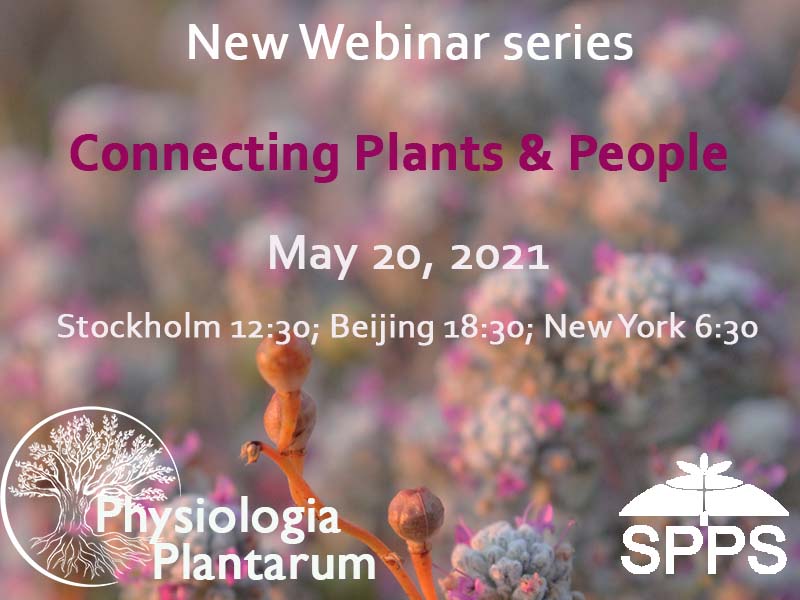
Connecting Plants & People: New webinar series

Welcome to our new webinar series ‘Connecting Plants & People’ hosted by Physiologia Plantarum (PPL) and the Scandinavian Plant Physiology Society (SPPS). The first event will feature the most recent work of up-and-coming scientists from the PPL and SPPS community. Please register, for free, directly on the webinar platform. The webinar is

Continue reading

Focus: Solute transporter’s role under stress conditions in plants

Rupesh Deshmukh1, Durgesh Kumar Tripathi2, Henry Nguyen3 and Humira Sonah1  1National Agri-Food Biotechnology Institute (NABI), Mohali, India 2Amity Institute of Organic Agriculture (AIOA), Amity University, Uttar Pradesh, India 3Division of Plant Sciences, University of Missouri, Columbia, MO, USA e-mails: rupesh@nabi.res.in; dktripathiau@gmail.com; nguyenhenry@missouri.edu; humira@nabi.res.in       Intra-and intercellular traffickings are crucial aspects

Continue reading

Call for articles- Blue economy in the North

Blue economy in the North -Scandinavian algal biotechnology For converting a society dependent on fossil fuels and nuclear energy into a sustainable, bio-based society, all production processes and products must be optimized for low material and energy use. Photosynthetic organisms use solar energy to incorporate atmospheric CO2 into organic molecules.

Continue reading

Another rewarded reviewer: Sergey Shabala

Sergey Shabala is a Professor in Plant Physiology and the Head of the Stress Physiology laboratory at the University of Tasmania. His research focusses on investigating different types of abiotic stresses in crop plants and he is also very passionate about teaching younger scientists and sharing his knowledge and enthusiasm

Continue reading

Reviewers’ award 2019

The whole structure of peer-reviewed journals lies on the shoulders of expert reviewers. They are the key to scientifically sound articles and yet, they are doing the job for free on the basis that other fellow scientists will do the same for them. As a result, scientists have a service

Continue reading